Home›Other›Best Acoustic Panels for Home Studio: 5 Top Picks
Other
Best Acoustic Panels for Home Studio: 5 Top Picks
The best acoustic panels for a home studio reduce reflections, echoes, and excessive reverberation without creating an unnaturally dull sound. Fabric-covered mineral wool and fiberglass panels typically provide broader absorption than thin foam, especially when installed with an air gap. Acoustic foam remains useful for affordable, targeted treatment and reflection control in the mid- and high-frequency ranges. This guide compares five widely available products for recording, mixing, streaming, podcasting, gaming, and general room treatment. Keep in mind that acoustic panels improve the sound inside a room, but do not provide true soundproofing from external noise.
Some links on this page are affiliate links. If you buy through them, we may earn a commission at no extra cost to you.
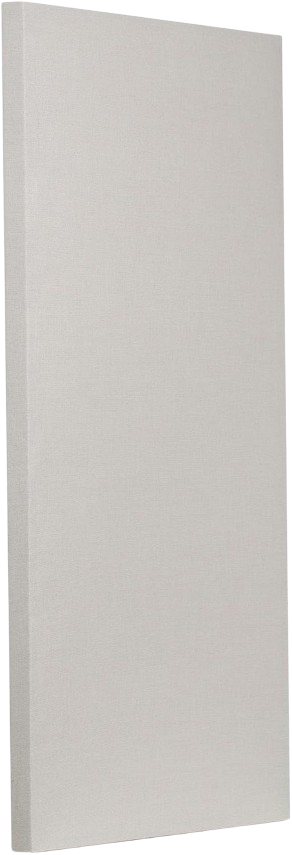
ATS Acoustics Sona Fabric Panel, 24 x 48 x 2 Inches
9.5Best Overall
9.5/10
This large fabric-wrapped panel uses a mineral-wool core inside a solid wood frame and is designed to reduce reverb and reflections in recording studios, listening rooms, and workspaces. The Sona fabric version is listed with an NRC of 1.0 and Class A or Class 1 fire performance, making it one of the strongest all-purpose options in this guide.
Why we love it
Broad 24 x 48-inch coverage treats reflection points efficiently.
Mineral wool provides broader absorption than typical thin acoustic foam.
Published NRC 1.0 indicates very strong midrange and high-frequency absorption.
Solid wood framing protects the panel edges and gives it a finished appearance.
The fabric-wrapped design suits permanent studio installations and visible living spaces.
Watch out for
A 2-inch wall-mounted panel is not a replacement for dedicated corner bass traps.
The large format needs accurate wall measurements and sturdy mounting.
Performance and fire specifications can vary between fabric and finish versions.
Best for: Home-studio owners who want strong broadband absorption and a professional-looking wall panel.
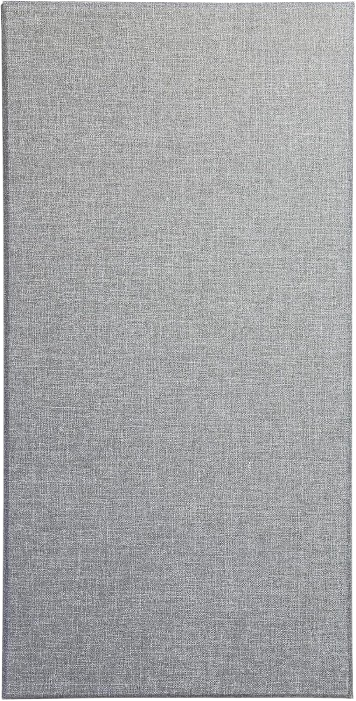
The Broadway 2-inch panels use high-density glass wool covered with acoustically transparent fabric. The six-panel pack provides substantial coverage for first reflections, flutter echo, and general reverberation, while the manufacturer publishes an NRC of 1.00 for the fabric version and multiple fire-test standards.
Why we love it
Six 24 x 48-inch panels provide extensive coverage for a studio room.
High-density glass wool offers broadband absorption in a relatively slim format.
Published NRC 1.00 supports strong absorption across the measured midrange.
Fabric finishes create a clean appearance suitable for walls and ceilings.
The range includes mounting approaches for reflection points and room arrays.
Watch out for
Flush-mounted 2-inch panels still need help from thicker corner treatment for bass.
The six-panel pack may exceed the needs of a very small vocal booth.
Correct placement is important; covering every wall can make a room overly dry.
Best for: Producers who want large, studio-oriented panels with strong published technical data.
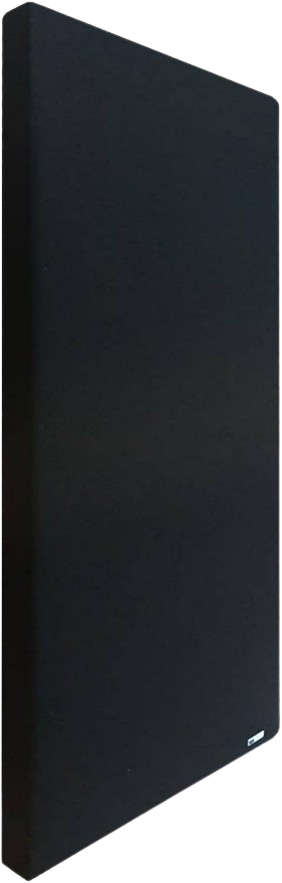
The 242 is a rigid-core broadband absorber with a built-in air gap that increases absorption compared with a flat panel mounted directly against the wall. Its 3.625-inch overall depth, solid wood frame, fabric construction, and picture-style mounting make it particularly useful at first-reflection points and selected corners.
Why we love it
The integrated air gap improves low-frequency performance without requiring a separate spacer.
Rigid construction gives the panel a durable, furniture-like finish.
Broadband design is appropriate for mixing, recording, and critical listening.
Standard formats make it easier to arrange panels symmetrically around monitors.
The panel can be used on walls or adapted for corner treatment.
Watch out for
It costs more than basic foam and usually requires a more deliberate treatment plan.
One panel provides limited coverage, so a balanced room may need several.
It helps with low-mid reflections but should not be treated as a complete deep-bass solution.
Best for: Mixers who want an attractive rigid absorber with more depth than a standard 2-inch panel.
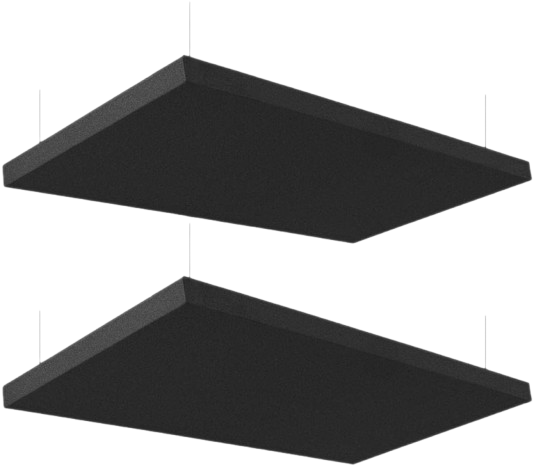
Nimbus is a suspended ceiling treatment consisting of two 24 x 48-inch panels with a 1.5-inch glass-wool core and included suspension hardware. Hanging the panels above a desk, microphone, or mix position targets ceiling reflections that wall treatment cannot fully address.
Why we love it
Ceiling placement controls reflections directly above the listening or recording position.
The 24 x 48-inch format provides useful overhead coverage.
High-density glass wool offers broader absorption than basic ceiling foam.
Included anchors and suspension cables simplify the installation process.
It can improve speech clarity in studios, offices, podcast rooms, and gaming spaces.
Watch out for
Ceiling installation requires secure anchors matched to the ceiling structure.
The 1.5-inch thickness is less suitable for serious low-frequency control.
A ceiling cloud is a targeted upgrade, not a complete room-treatment package.
Best for: Home-office and studio users who need overhead reflection control above a desk or microphone.
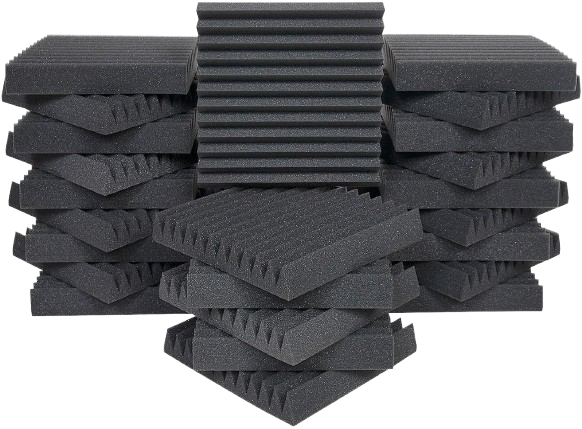
Studiofoam Wedgies are 24 one-foot square polyurethane foam panels designed for spot treatment in studios, streaming setups, vocal spaces, and listening rooms. Auralex publishes an overall NRC of 0.75 and identifies the foam as most effective on mid and high frequencies.
Why we love it
The 24-panel pack is easy to arrange around microphones, monitors, and desks.
Foam is lightweight and simpler to install than framed mineral-wool panels.
The wedge profile provides useful surface variation for spot treatment.
Published NRC 0.75 is respectable for a compact foam product.
The familiar one-foot format works well in small rooms and streaming spaces.
Watch out for
Two-inch foam is considerably less effective for low-frequency room problems.
It does not replace thick broadband panels or corner bass traps.
Adhesive installation can make repositioning difficult and may affect painted walls.
Best for: Beginners who need affordable control of flutter echo and high-frequency reflections.
The ATS Acoustics Sona Fabric Panel deserves the top spot because it combines the qualities most home studio buyers require in a single, practical format. Its 24 x 48-inch surface effectively covers reflection points, while its mineral wool core and claimed NRC sound absorption coefficient of 1.0 indicate strong broadband absorption in key speech and music frequencies. The sturdy wood frame and fabric finish also make it more durable and visually more refined than cheaper foam. Class A or Class 1 fire ratings add another advantage for permanent indoor installations. A 2-inch panel won't solve all bass issues, so corner traps may still be necessary, but the ATS panel offers a better starting point for balanced room treatment than foam alone. The combination of finish, construction, claimed performance, compatibility, and ease of wall mounting makes it a top choice overall.
How we picked
These recommendations were developed based on an independent, research-based analysis of acoustic materials suitable for home studios. We compared manufacturer specifications, official technical data, independent professional evaluations, long-term user reviews, community discussions, and comparisons covering absorption, design, compatibility, installation, reliability, and value for money. Particular attention was paid to core material, thickness, published absorption data, fire safety information, mounting systems, intended placement, and whether each product was designed to suppress broadband reflections or primarily mid- and high-frequency sound. We prioritized details that remained consistent across multiple independent sources rather than relying on a single review or isolated user opinion. Where sources differed, we used the most reliable and up-to-date technical information and avoided unfounded interpretations. The products were also evaluated for practical room treatment scenarios, including first-reflection control, ceiling treatment, vocal recording, streaming, gaming, and small-room mixing. The final selection included both professional-grade rigid absorbers and more affordable foam materials, allowing buyers to tailor the treatment to their space, objectives, installation needs, and budget.
Frequently Asked Questions
Prioritize thickness, core material, published absorption data, mounting options, and the panel’s intended frequency range. Fabric-wrapped mineral wool or glass wool usually offers broader absorption than thin foam, while thicker panels or built-in air gaps are preferable when low-mid buildup is a concern.
No. Acoustic panels absorb reflections inside the room and reduce echo, reverberation, and flutter. They do not create the mass, airtightness, or structural isolation needed to prevent voices, traffic, or music from passing through walls.
Two-inch panels are practical for first-reflection points and general midrange control. Four-inch panels, or 2-inch panels mounted with an air gap, generally provide broader low-frequency absorption and are more suitable for bass-heavy rooms.
Foam is lighter, less expensive, and convenient for controlling flutter echo and high-frequency reflections. Mineral wool and fiberglass panels are normally the better choice when you need broadband absorption, stronger low-mid control, a framed finish, or more published technical information.
There is no universal number because room size, furniture, microphone position, speaker placement, and untreated surfaces all matter. A sensible starting layout is to treat the first-reflection points beside the monitors, the wall behind the speakers when appropriate, and the ceiling above the listening position before adding more coverage.
Yes, but the mounting method must match the surface and the panel’s weight. Lightweight foam may use removable mounting solutions, while framed mineral-wool and fiberglass panels generally need anchors, impalers, picture hangers, or another mechanically secure system. Suspended clouds require especially careful attachment to ceiling joists or suitable structural anchors.