The best budget microphones deliver clear, high-quality sound without the need for expensive studio gear. This guide compares dynamic and condenser models for streaming, podcasting, gaming, remote work, and voice recording. USB connectivity simplifies setup, while models with a USB/XLR connector provide a convenient upgrade path in the future. Dynamic microphones are generally suitable for untreated rooms because they focus more precisely on the speaker and capture less ambient noise. Condenser microphones can provide greater detail but typically benefit from a quieter environment and careful placement. Our recommendations balance sound-focused features, compatibility, ease of use, build quality, and long-term value.
Some links on this page are affiliate links. If you buy through them, we may earn a commission at no extra cost to you.
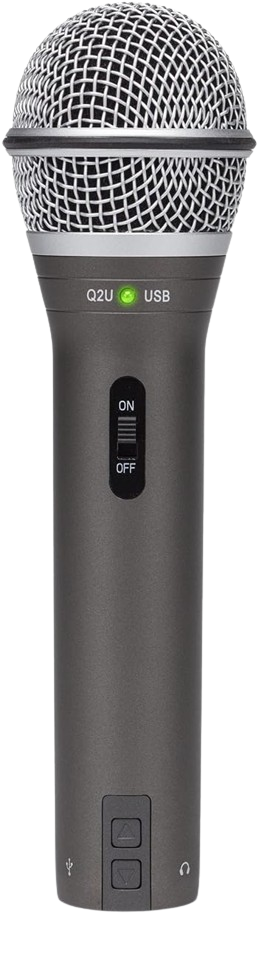
The Samson Q2U is a dynamic cardioid microphone with both USB-C and XLR outputs. It includes headphone monitoring, volume control, a tripod stand, a windscreen, and cables, making it one of the most versatile entry-level microphones available. Its official specifications list a 50 Hz–15 kHz frequency response and USB recording up to 16-bit/48 kHz.
Why we love it
USB and XLR outputs support both simple computer recording and future interface-based setups.
The dynamic cardioid design is well suited to speech in untreated rooms.
Zero-latency headphone monitoring helps users hear their voice without noticeable delay.
The package includes useful starter accessories, reducing the need for immediate add-on purchases.
Its established design offers an unusually strong combination of flexibility, usability, and value.
Watch out for
The microphone needs to be positioned fairly close to the speaker for a strong, full signal.
USB recording is limited to 16-bit and up to 48 kHz.
The included tripod is suitable for basic use but may occupy useful desk space.
Best for: Beginners, podcasters, streamers, and remote workers who want a dependable microphone with a future XLR upgrade path.
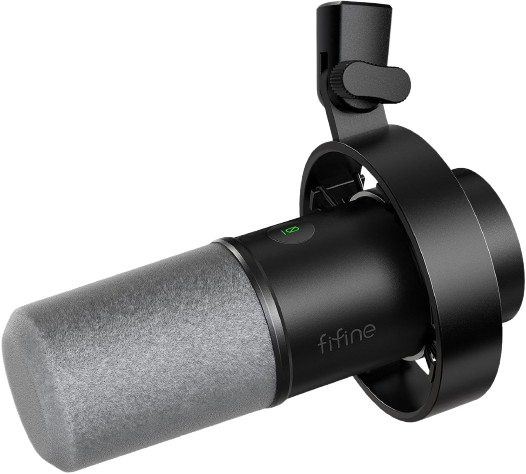
The FIFINE K688 is a dynamic cardioid microphone with USB-C and XLR connectivity, a headphone-monitoring output, gain control, and touch mute. Official specifications list 16-bit/44.1–48 kHz USB recording, a 50 Hz–15 kHz frequency response, and a 130 dB maximum SPL.
Why we love it
It combines USB convenience and XLR flexibility at a budget-friendly level.
On-microphone gain and mute controls make it practical for streaming and calls.
The dynamic capsule can be a sensible choice for rooms with fans, keyboards, or moderate background noise.
Headphone monitoring makes setup and level checking easier.
The included shock mount and windscreen add useful value compared with bare microphone packages.
Watch out for
The USB recording specification is limited to 16-bit and up to 48 kHz.
Its controls and accessories make the package larger than simpler compact microphones.
Like most dynamic microphones, it performs best when the speaker stays close and speaks toward the front of the capsule.
Best for: Value-focused creators who want useful onboard controls and both USB and XLR connectivity.
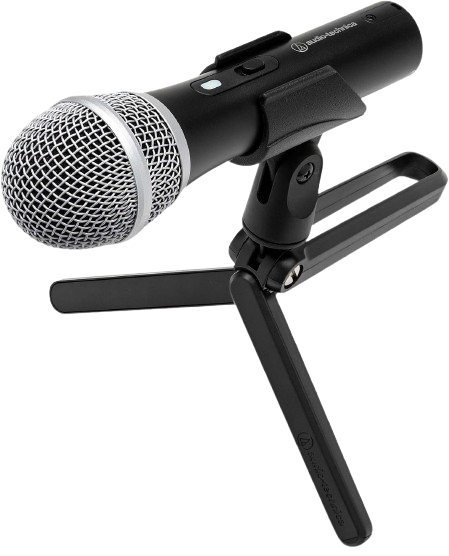
The ATR2100x-USB is a handheld dynamic cardioid microphone with USB-C, XLR, and a headphone output. Its official documentation lists up to 24-bit recording, sample rates up to 192 kHz, an on/off switch, headphone volume control, and included USB, XLR, and desktop-stand accessories.
Why we love it
USB-C and XLR outputs provide excellent connection flexibility.
The dynamic cardioid design is appropriate for speech, live use, and less controlled rooms.
The headphone output and volume control support direct monitoring.
It includes both USB-C-to-USB-C and USB-C-to-USB-A cables.
The handheld format works well for presentations, interviews, voiceover, and portable recording.
Watch out for
The handheld design may require a boom arm or stand for comfortable long-form desk use.
It has fewer dedicated streaming controls than the FIFINE K688.
The microphone’s benefits depend heavily on correct distance and speaking angle.
Best for: Users who want a flexible handheld microphone for podcasting, voiceover, calls, and occasional live use.
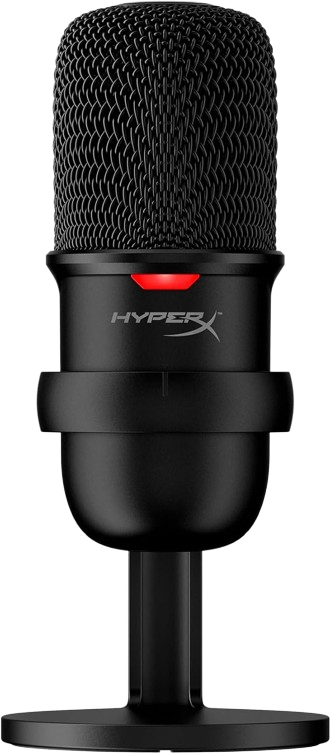
The HyperX SoloCast is a compact USB-C condenser microphone with a cardioid pickup pattern and tap-to-mute control. Official product information lists 24-bit/96 kHz recording, while professional evaluations highlight its straightforward setup and clear single-speaker capture.
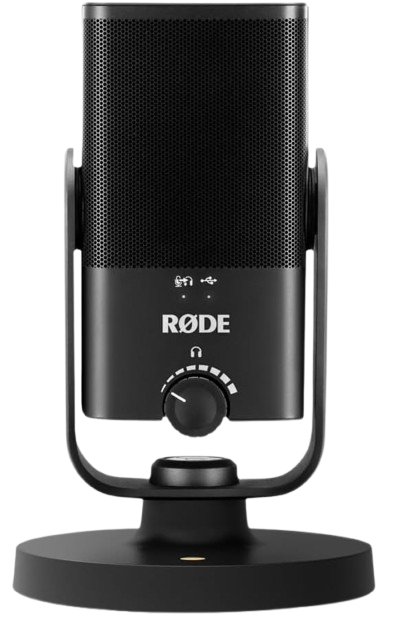
The RØDE NT-USB Mini is a compact cardioid USB condenser microphone designed for voice recording, streaming, and calls. It supports 24-bit/48 kHz conversion, includes a 3.5 mm headphone output, and uses a USB-C connection.
Why we love it
Its 24-bit/48 kHz conversion is well matched to voice recording and online communication.
The built-in headphone output supports direct monitoring.
The compact form factor is practical for office desks and portable setups.
The integrated pop filter helps reduce some plosive sounds.
Its magnetic stand and compatibility with recording and streaming software improve everyday usability.
Watch out for
It is a USB-only microphone with no XLR output.
The condenser capsule can reveal room reflections and nearby noise.
The fixed cardioid pattern offers less flexibility for multiple speakers.
Best for: Remote workers, educators, podcasters, and creators who prioritize polished voice quality and simple desk setup.
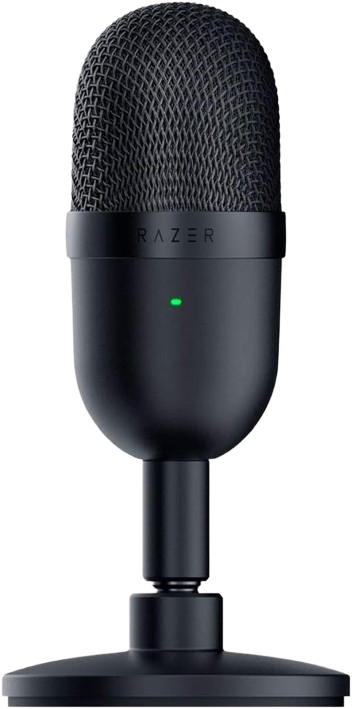
The Razer Seiren Mini is a compact USB condenser microphone with a supercardioid pickup pattern and a small desktop stand. Official specifications list 16-bit recording at 44.1 or 48 kHz, a 20 Hz–20 kHz frequency response, and USB connectivity.
Why we love it
Its compact size works well on crowded desks.
The supercardioid pattern helps focus pickup toward the speaker.
USB connectivity makes it easy to use with compatible computers.
The included stand provides a low-cost starting setup.
It offers a straightforward entry point for gaming, calls, and casual content creation.
Watch out for
It has no headphone output for direct monitoring.
The microphone uses a USB connection only and has no XLR upgrade path.
Its basic controls and accessories may be limiting for more advanced recording workflows.
Best for: Buyers seeking an inexpensive, space-saving microphone for gaming, calls, and casual streaming.
The Samson Q2U microphone takes the top spot thanks to its optimal balance of features for budget-conscious buyers. Its dynamic cardioid polar pattern is practical for typical rooms where fans, keyboards, and reflections can make condenser microphones challenging. USB connectivity simplifies setup for beginners, and XLR connectors provide a convenient upgrade path should users later add an audio interface or mixer. Headphone monitoring, a volume control, included cables, and a tabletop stand also make the package exceptionally complete. Its 16-bit/48 kHz USB specification is less advanced than some newer condenser models, but higher resolution alone doesn't guarantee better results for voice recording. The combination of flexible connectivity, room acoustic stability, useful accessories, proven design, and a reasonable price makes the Q2U a perfect choice for podcasting, streaming, calls, and voice recording.
How we picked
These recommendations were compiled based on independent, research-based product analysis. We collated manufacturer specifications, official technical documentation, professional product evaluations, long-term user reviews, community discussions, and comparisons covering features, performance, compatibility, reliability, usability, and value for money. Priority was given to information that remained consistent across multiple independent sources, rather than individual opinions or a single review. We considered practical differences between dynamic and condenser microphones, including the performance of each design in untreated rooms, near a keyboard, and when recording voices. Connectivity was also important: USB-connected models were evaluated for plug-and-play ease of use, while USB/XLR-connected microphones were evaluated for their value as a long-term investment. Where sources disagreed, the most reliable and up-to-date technical information prevailed, and unverified performance claims were excluded. Ratings reflect the overall balance of features, ease of setup, versatility, accessories, reputation, and likely suitability for budget-conscious buyers.
Frequently Asked Questions
Start with the microphone type, connection, pickup pattern, and monitoring options. Dynamic cardioid microphones are often easier to manage in untreated rooms, while condensers can capture more detail in quieter spaces. A headphone output is useful for checking your voice and avoiding software-monitoring delay.
USB is simpler because it connects directly to a computer and usually requires no separate interface. XLR can offer a more expandable setup, but it requires an audio interface or mixer. A USB/XLR microphone is a useful compromise if you want easy setup now and an upgrade path later.
Neither type is universally better. Condenser microphones can sound detailed and sensitive, but they may capture more room noise, reflections, and keyboard sounds. Dynamic microphones generally require closer positioning but can be easier to use in bedrooms, offices, and other untreated spaces.
No. Bit depth and sample rate describe digital recording capability, not the entire quality of the finished recording. Microphone placement, room acoustics, speaking technique, gain settings, and background noise usually have a greater practical effect on spoken voice.
Compatibility depends on the device, operating system, adapter, and available power. USB microphones generally work with many modern computers, while mobile devices may require an appropriate USB adapter or powered connection. Check the manufacturer’s compatibility and support information before buying for mobile use.
Most speech microphones work best when positioned approximately 10–20 cm from the speaker, with the front of the capsule aimed toward the mouth. Use a pop filter or windscreen and speak slightly across the microphone rather than directly into it to reduce plosive bursts. Exact distance depends on the model and the desired voice tone.