The best wireless microphones for content creators combine clear voice capture, reliable wireless transmission, easy setup, and convenient backup recording. The DJI Mic 3 is the best all-rounder, combining lightweight transmitters, 32-bit floating-point recording, timecode, long battery life, and extensive multi-device support. The RØDE Wireless PRO remains an attractive professional option with built-in recording, reliable connections, and a comprehensive set of accessories. The Hollyland LARK MAX 2 stands out for its long transmitter battery life and advanced monitoring features, while the RØDE Wireless Micro and Sennheiser Profile Wireless prioritize simplicity and proven audio technology. The right system depends on whether you're recording with cameras, phones, computers, or multiple speakers.
Some links on this page are affiliate links. If you buy through them, we may earn a commission at no extra cost to you.
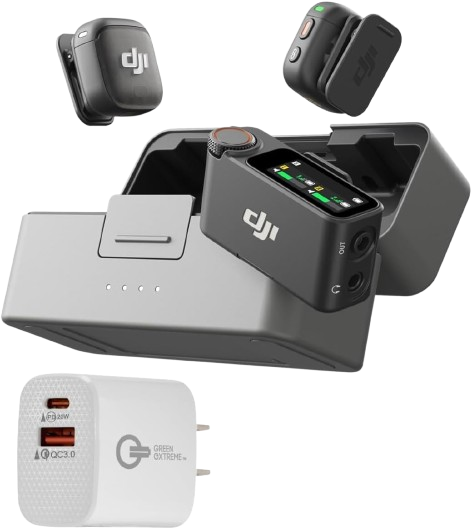
DJI Mic 3 is a compact two-transmitter system designed for creators who want a broad feature set without moving to larger professional wireless equipment. Its transmitters support 32-bit float and 24-bit internal recording, while the receiver adds timecode, four-channel output, and support for multiple transmitters and receivers. DJI lists 400-meter maximum transmission in unobstructed conditions and 80 meters in a simulated high-interference environment.
Why we love it
32-bit float and 24-bit internal recording provide flexible backup options when speech levels change unexpectedly.
Lightweight 16-gram transmitters are unobtrusive on clothing and suitable for extended creator sessions.
Adaptive gain control, voice presets, and two-level noise cancellation simplify everyday recording.
Timecode support and four-channel output make the system useful for more advanced multi-camera workflows.
The transmitters run for up to eight hours, the receiver for up to 10 hours, and the case provides approximately 2.4 charging cycles.
Watch out for
The 400-meter range is an unobstructed, interference-free maximum, not a typical indoor expectation.
Some advanced features and operating frequencies can vary by country or region.
The charging case adds bulk compared with minimalist phone-only microphone kits.
Best for: Creators who want the most complete balance of sound protection, portability, compatibility, and professional workflow features.
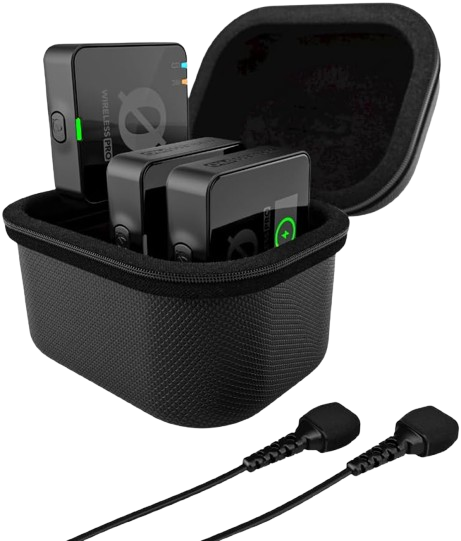
RØDE Wireless PRO is a professional-oriented two-transmitter system with internal recording, timecode, locking 3.5mm inputs, and a broad accessory bundle. The package includes two Lavalier II microphones, magnetic clips, windshields, a charging case, and cables for cameras, phones, tablets, and computers.
Why we love it
Internal backup recording and 32-bit float capture are well suited to interviews, events, and unpredictable speech levels.
Locking 3.5mm inputs reduce the chance of a connected lavalier cable being pulled loose.
The included Lavalier II microphones make it a more complete out-of-box production kit.
Timecode support can simplify synchronization in multi-camera productions.
RØDE’s support documentation and computer-based configuration tools provide a mature workflow.
Watch out for
The transmitters are less compact and visually discreet than the lightest newer systems.
Professional controls and configuration options can take longer to learn.
Battery life is strong but not class-leading among newer creator-focused systems.
Best for: Video professionals, documentary creators, and interviewers who value redundancy, locking connections, and a complete accessory package.
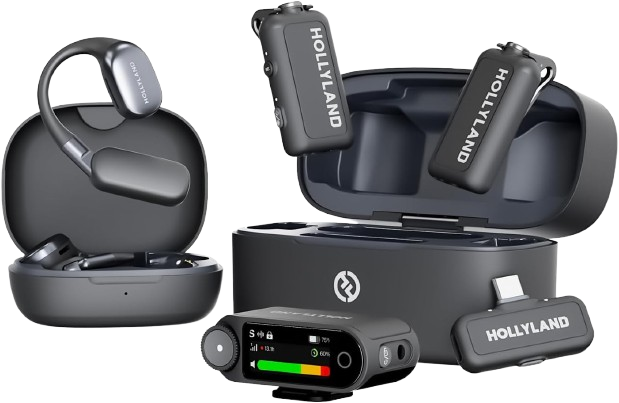
Hollyland LARK MAX 2 emphasizes long battery life, compact transmitters, 32-bit float internal recording, and timecode-oriented production features. Independent comparisons report up to 11 hours from each transmitter, while the system supports up to four transmitters on one receiver and can provide wireless monitoring through compatible earbuds.
Why we love it
Approximately 11 hours of transmitter runtime is useful for full-day shoots and travel.
32-bit float internal recording adds a safety net when levels are difficult to predict.
The system can support up to four transmitters, which suits group conversations and panel-style content.
Timecode and wireless monitoring features offer capabilities normally associated with more expensive production systems.
The compact 14-gram transmitters are easy to conceal and comfortable for mobile creators.
Watch out for
Maximum range claims are based on unobstructed conditions and may not translate directly to crowded indoor locations.
Some advanced connectivity and monitoring features may require careful setup.
Accessory and receiver options differ between regional packages, so confirm the exact kit contents.
Best for: Creators who need long battery life and advanced multi-person features at a competitive premium price.
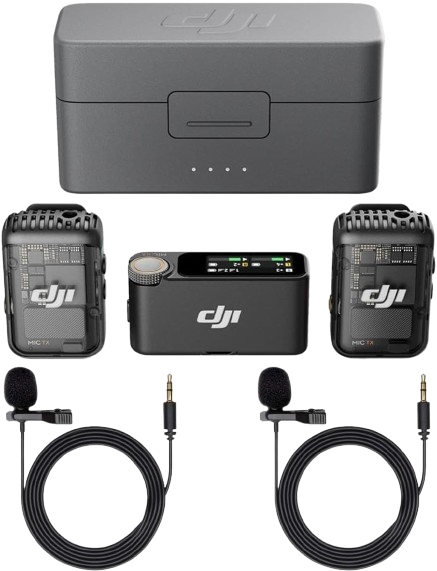
DJI Mic 2 remains a capable creator system with 32-bit float internal recording, Bluetooth connectivity, a charging case, and two transmitters in the common dual-microphone kit. DJI specifies six hours of transmitter and receiver operating time, a 250-meter FCC maximum range, and 160 meters under the cited CE limit in unobstructed conditions.
Why we love it
32-bit float internal recording provides valuable protection against clipped speech.
Bluetooth connectivity can simplify pairing with compatible devices and workflows.
The dual-transmitter kit is useful for co-hosted videos, interviews, and streams.
A touchscreen receiver provides direct access to essential monitoring and level controls.
It remains a strong option when discounted relative to newer flagship systems.
Watch out for
Six-hour rated operating time is shorter than several newer alternatives.
The 250-meter figure is an unobstructed maximum and varies by regulatory region.
The 28-gram transmitters are heavier than the DJI Mic 3 and some compact rivals.
Best for: Streamers, gamers, and creators who want dependable backup recording and a versatile receiver without paying for the newest model.
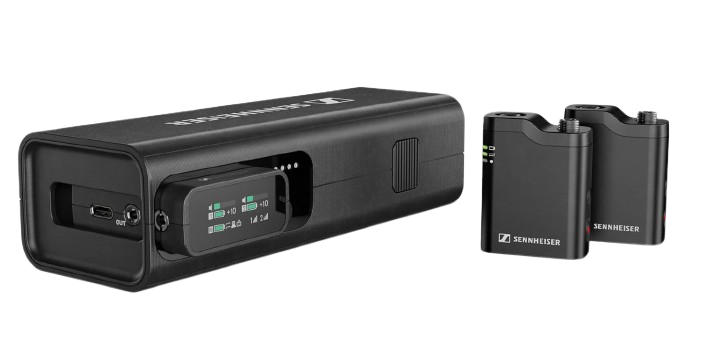
Sennheiser Profile Wireless is a straightforward two-transmitter system aimed at solo video producers, interviews, and mobile content. It uses 2.4GHz digital transmission, includes onboard recording, and supports camera-mounted, USB-C, and Lightning receiver connections. Professional evaluations report a rated line-of-sight range of about 245 meters and a 7-hour battery life.
Why we love it
Simple controls and multiple receiver connection options make it practical for cameras, phones, and computers.
Automatic backup recording can help preserve audio if the wireless signal is interrupted.
The system includes headphone monitoring and a two-channel receiver output.
The omnidirectional transmitters are suitable for presentations, interviews, and talking-head videos.
Sennheiser’s established microphone expertise supports a natural, speech-focused sound profile.
Watch out for
The receiver uses a non-diversity design, which can be less forgiving in difficult RF environments.
Its transmitters are heavier than the smallest creator-oriented alternatives.
It lacks some newer systems’ combination of 32-bit float, advanced multi-receiver operation, and adaptive gain tools.
Best for: Office presenters, educators, and solo creators who prioritize uncomplicated operation and flexible device connections.
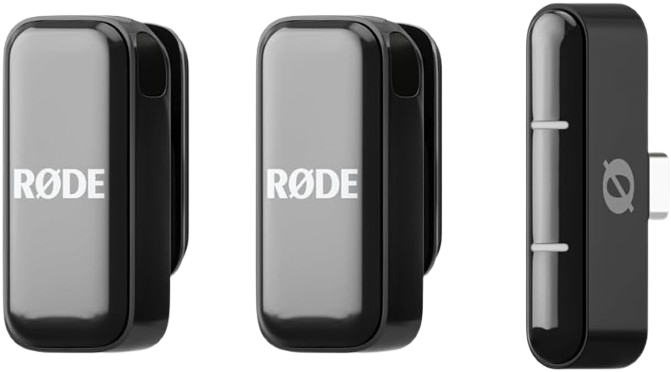
RØDE Wireless Micro is a pocket-sized two-transmitter system built primarily for smartphone recording. Its plug-in receiver, automatic level adjustment, built-in windshields, and charging case make it especially approachable for short-form video and mobile content. Available specifications identify 48kHz/24-bit recording, more than 100 meters of stated range, and no onboard recorder.
Why we love it
Plug-and-play smartphone operation keeps setup fast for beginners.
Two transmitters allow interviews, conversations, and two-person videos.
GainAssist automatically adjusts levels to reduce manual gain management.
Integrated windshields help reduce wind-related distractions during outdoor mobile recording.
The charging case extends total operating time to approximately 21 hours in the cited configuration.
Watch out for
There is no built-in transmitter recording, so a wireless dropout cannot be recovered from a local backup.
The receiver is designed around direct mobile connectivity rather than broad camera-production flexibility.
Confirm whether the required USB-C or Lightning version matches the recording device.
Best for: Smartphone-first creators who want the simplest reliable step up from a built-in phone microphone.
The DJI Mic 3 deserves the top spot because it offers the best combination of creator convenience and professional safety features. Its 16-gram transmitters are compact yet support both 24-bit and 32-bit floating-point internal recording, providing creators with a reliable backup audio source when voice levels suddenly change. The system also features adaptive gain control, voice presets, two-level noise reduction, timecode, and a four-channel output, allowing it to scale from simple video production to more complex multi-camera projects. Battery performance is competitive: up to eight hours per transmitter and 10 hours per receiver. DJI's claimed range of 400 meters applies to open, interference-free conditions, while the range in highly interfered environments is significantly lower, making the published limits more useful than just a headline figure. The result is a versatile, portable system with exceptionally broad compatibility and an attractive long-term prospect for content creators.
How we picked
These recommendations were selected based on an independent, research-based product analysis. The evaluation began with manufacturer specifications, official technical documentation, compatibility information, supporting materials, and stated operating limits. This data was compared with independent professional product evaluations, hands-on comparisons, long-term user reviews, community discussions, and regular reports on setup, reliability, battery life, connectivity, and software support. Products were then compared based on the factors most important to content creators: speech clarity, wireless stability, range, internal backup recording, distortion protection, battery life, transmitter size, connectivity options, monitoring, multi-user recording, workflow compatibility, and overall value. Priority was given to information that appeared consistently across multiple independent sources, rather than individual opinions or a single impressive specification. In cases where sources disagreed, the more recent and technically accurate information was given precedence, and claims that could not be verified were excluded. Ratings reflect a balance of capabilities, practical applicability, reliability evidence, and price positioning at the time of the study. Availability, configuration, regional features, and compatibility may vary by configuration and market.
Frequently Asked Questions
Prioritize clear speech, dependable transmission, a receiver that matches your camera or phone, and a transmitter that can be positioned close to the speaker’s mouth. Internal backup recording is especially valuable because it preserves audio if the wireless signal drops. Battery life, wind protection, monitoring, size, and included cables also affect everyday usability.
No, but it is useful insurance when recording levels are unpredictable. It can provide more flexibility when recovering quiet or loud audio in post-production, although it does not fix severe background noise, poor microphone placement, or a distorted microphone capsule. A good 24-bit system can still produce excellent results when gain is set correctly.
They are usually maximum line-of-sight figures measured in open areas with limited interference. Walls, people, metal structures, Wi-Fi congestion, and the position of the receiver can reduce practical range substantially. For indoor interviews and normal creator setups, stable placement and clear signal indicators matter more than choosing the largest advertised number.
Choose a phone-focused kit if you primarily record short-form videos and want plug-and-play operation. Choose a camera-style system if you use mirrorless cameras, need headphone monitoring, want a 3.5mm connection, or expect to expand into interviews and multi-camera work. Some systems include interchangeable or additional mobile receivers, but the exact package should be checked before purchase.
Usually yes for mobile creators because it protects the transmitters and receiver while keeping them charged between shoots. However, case capacity and total-runtime claims vary, so compare the number of full recharges rather than relying only on a large total-hour figure. A case is less important if the microphone remains installed in a fixed studio setup.
DJI Mic 3 is the better all-around choice for creators who value lighter transmitters, adaptive gain, newer multi-device features, and longer rated transmitter life. RØDE Wireless PRO is stronger for production workflows that benefit from locking lavalier inputs, included professional lavalier microphones, and a mature accessory package. Choose based on whether portability and modern automation or physical connectivity and bundled accessories matter more.