The best gaming microphones make your voice clearer in Discord, multiplayer chats, and livestreams. USB models are usually the easiest choice, as they connect directly to your computer without an audio interface. Dynamic microphones can help reduce room noise, while condenser models often capture more detailed, open vocals. Helpful features include headphone monitoring, built-in mute controls, adjustable polar pattern, and overload protection. We compared leading microphones based on sound quality, compatibility, controls, software, build quality, and long-term value. The Shure MV6 is the most versatile option for most gamers, while other models suit different budgets and configurations.
Some links on this page are affiliate links. If you buy through them, we may earn a commission at no extra cost to you.
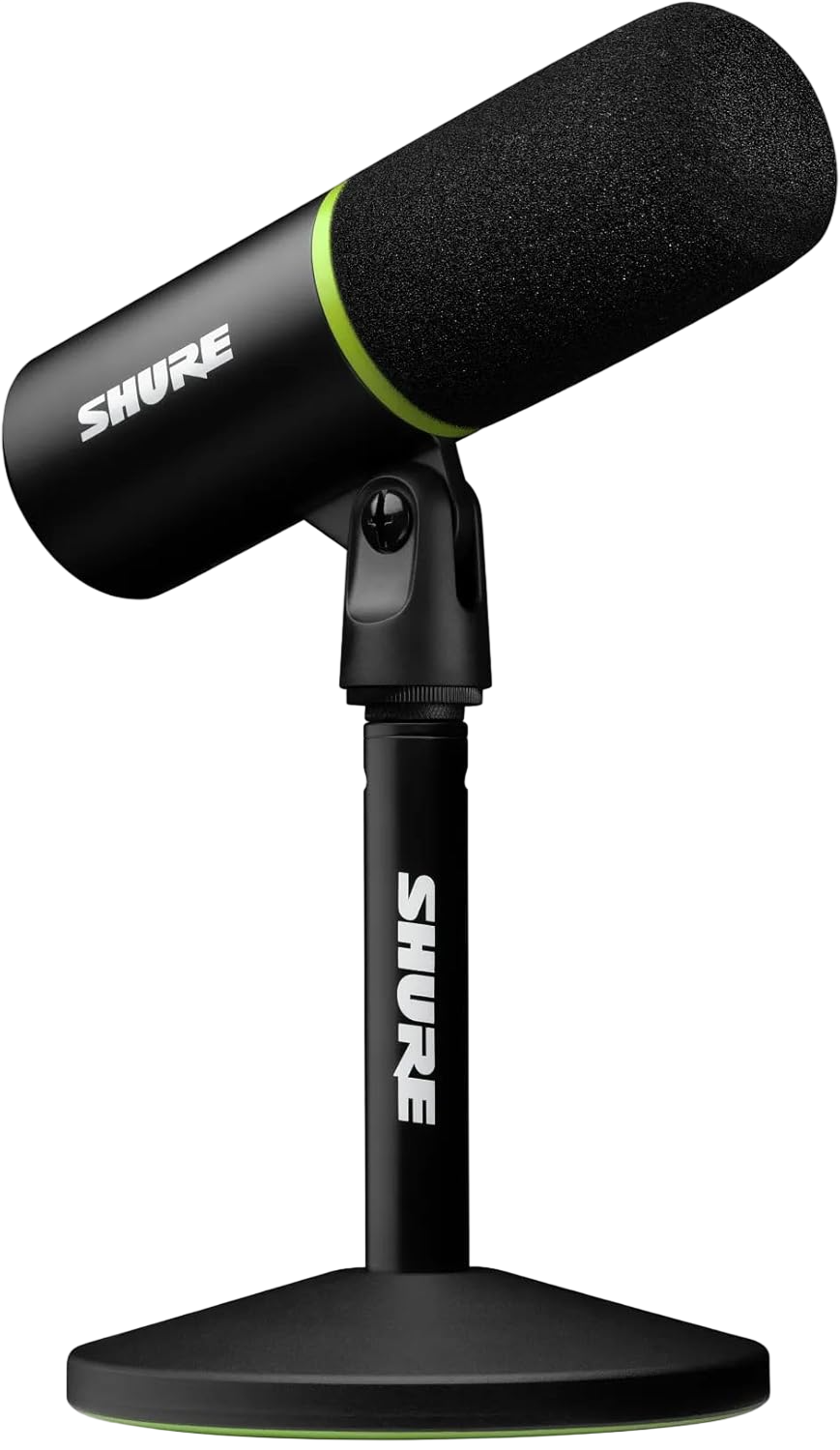
The Shure MV6 is a dynamic USB microphone designed specifically for gaming, streaming, and voice communication. It combines voice-isolation hardware with automatic level control, a digital pop filter, real-time denoising, USB-C connectivity, and headphone monitoring.
Why we love it
Dynamic construction and rear rejection can help limit unwanted room sound.
Auto Level Mode adjusts gain in real time for more consistent volume.
Real-time Denoiser and Digital Popper Stopper reduce common voice-chat problems.
USB-C connection and 3.5mm monitoring make setup straightforward.
The MOTIV Mix software provides useful control over processing and audio routing.
Watch out for
The cardioid pattern is designed primarily for one speaker.
Its 50 Hz–15 kHz frequency response is narrower than some condenser alternatives.
Advanced app features require compatible MOTIV software.
Best for: Gamers who want polished, consistent voice quality with minimal manual adjustment.
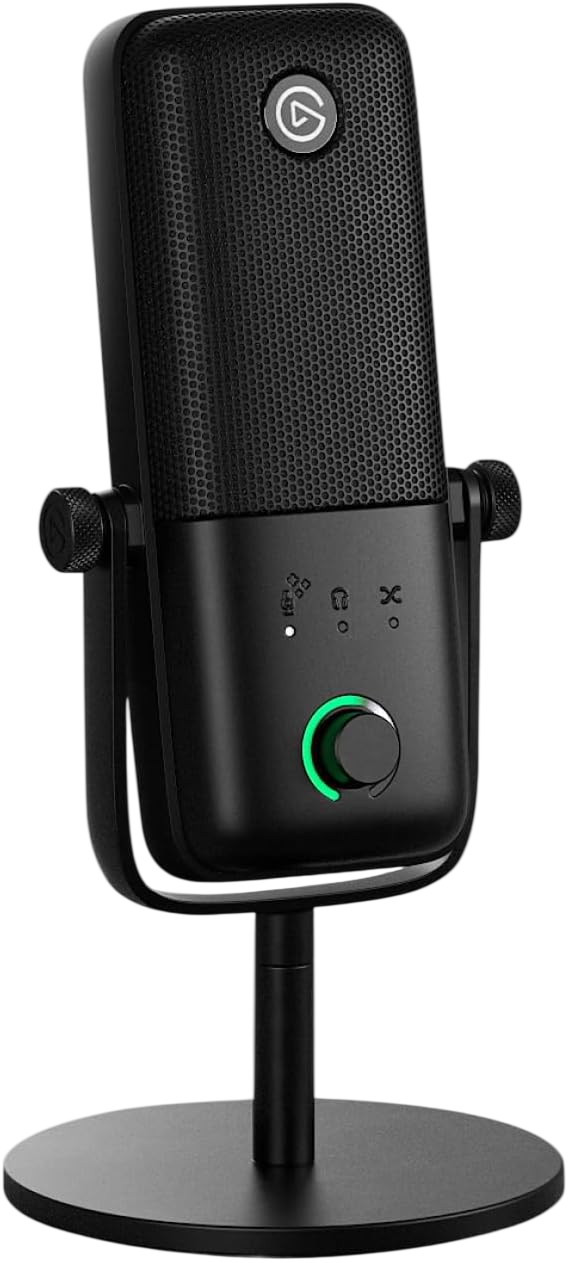
The Wave:3 MK.2 is a USB condenser microphone built around voice processing and flexible computer-based audio routing. It includes Clipguard 2.0, onboard DSP, Auto Gain, a built-in pop filter, headphone monitoring, and Wave Link integration.
Why we love it
Clipguard 2.0 helps protect loud speech from audible clipping.
Wave Link supports separate audio mixes and app-based routing.
Auto Gain simplifies setup for users who do not want to tune gain manually.
The cardioid capsule focuses capture toward the speaker.
USB-C and zero-latency headphone monitoring suit desktop gaming and streaming.
Watch out for
The condenser capsule may capture more room sound than a dynamic microphone.
Wave Link’s deepest benefits are concentrated on computer-based setups.
A boom arm or alternative mount is an additional purchase.
Best for: Streamers who want advanced software routing and consistent vocal processing.
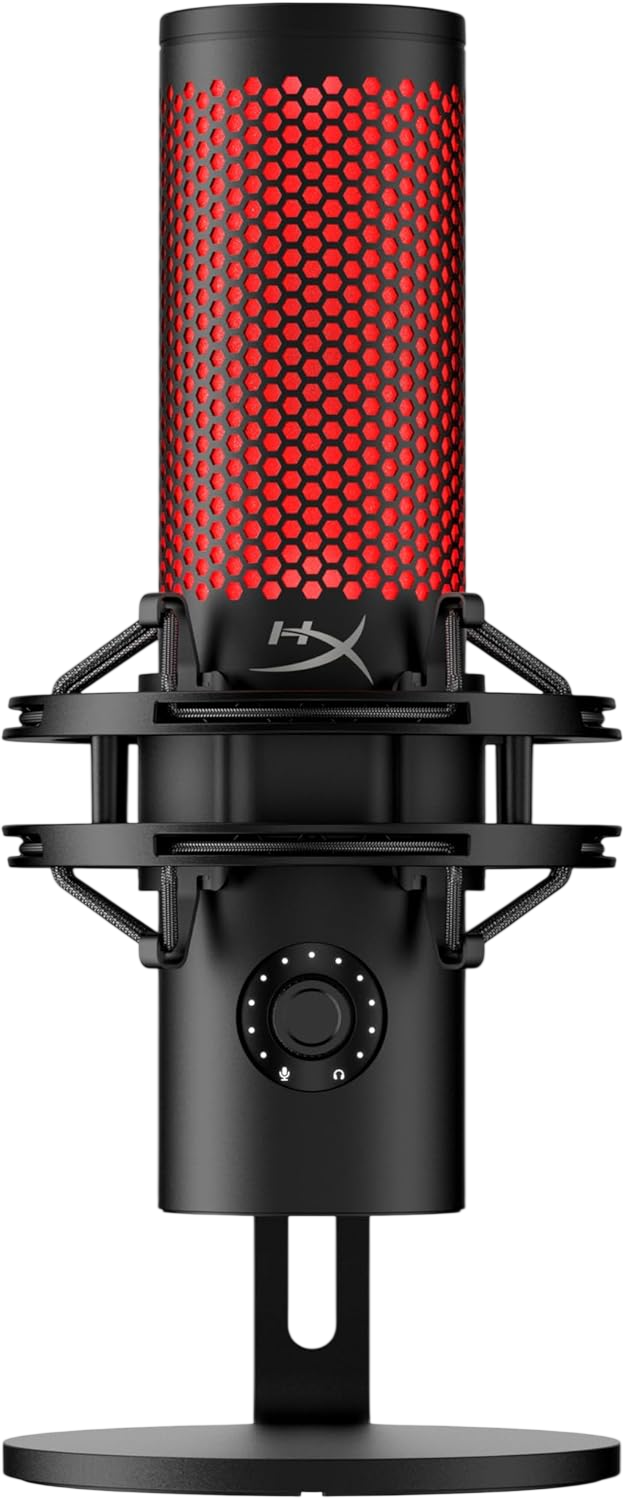
The HyperX QuadCast 2 combines a 24-bit/96 kHz USB recording mode with four selectable polar patterns, a removable shock mount, onboard controls, and headphone monitoring. It supports PC, Mac, PlayStation 5, Nintendo Switch, and Steam Deck, with lighting and configuration handled through HyperX NGENUITY.
Why we love it
Four polar patterns support solo gaming, group recording, and shared conversations.
The included shock mount helps reduce vibration transmitted through the desk.
Tap-to-mute and the multifunction knob are convenient during play.
USB-C connectivity and broad platform support simplify multi-device use.
The 24-bit/96 kHz mode provides substantial recording flexibility.
Watch out for
The condenser design can pick up keyboard and room noise.
RGB and software behavior may vary depending on the software environment.
Extra pickup patterns are unnecessary for users who only need one-person chat.
Best for: Gamers who want versatile controls, lighting, and wide platform compatibility.
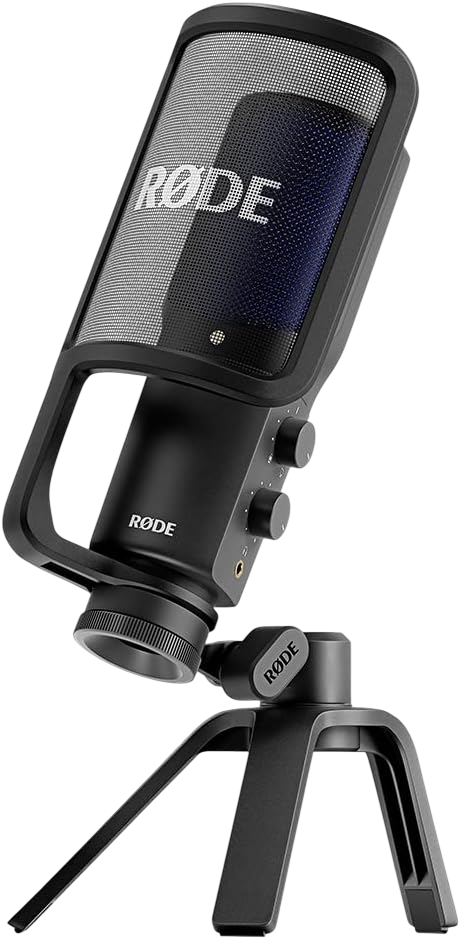
The RØDE NT-USB+ is a cardioid USB condenser microphone intended for gaming, streaming, podcasting, and recording. It includes a low-noise, high-gain preamp, APHEX processing through companion software, a detachable pop filter, a desktop stand, and zero-latency headphone monitoring.
Why we love it
The tight cardioid pattern is useful for focused speech capture.
The included pop filter and stand provide a practical out-of-box setup.
High-power headphone output supports direct monitoring.
USB-C and class-compliant operation support computers, phones, and tablets.
Optional APHEX processing extends its usefulness beyond gaming.
Watch out for
Condenser sensitivity makes placement and room acoustics important.
Some advanced processing depends on companion software.
It lacks the multi-pattern flexibility of the QuadCast 2.
Best for: Gamers who also need a polished microphone for meetings, voice-over, and general recording.
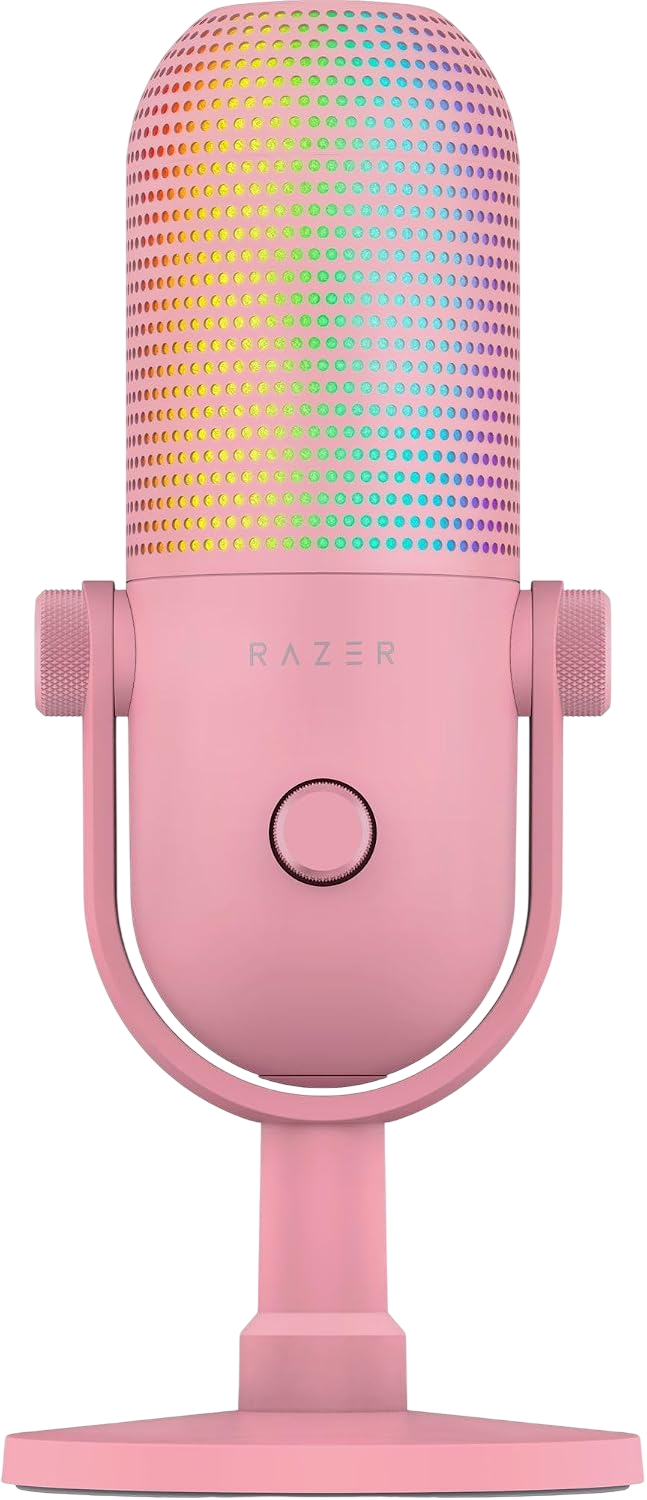
The Razer Seiren V3 Chroma 32-Bit DSP is a USB supercardioid condenser microphone with onboard AI-powered noise reduction, automatic EQ, compression, limiting, and stream-reactive RGB lighting. It also includes tap-to-mute control and plug-and-play support for common gaming and streaming software.
Why we love it
The supercardioid pattern is designed to narrow unwanted side and rear pickup.
Onboard processing can reduce the need for separate audio plugins.
Tap-to-mute and programmable touch controls are convenient during streams.
RGB lighting integrates with the wider Chroma ecosystem.
Support for 24-bit or 32-bit depth and 48 or 96 kHz sample rates offers flexibility.
Watch out for
RGB features matter little if appearance is not a priority.
Razer Synapse is needed for deeper configuration.
A condenser capsule still benefits from close placement and a quieter room.
Best for: Gamers who want built-in processing and customizable RGB lighting.
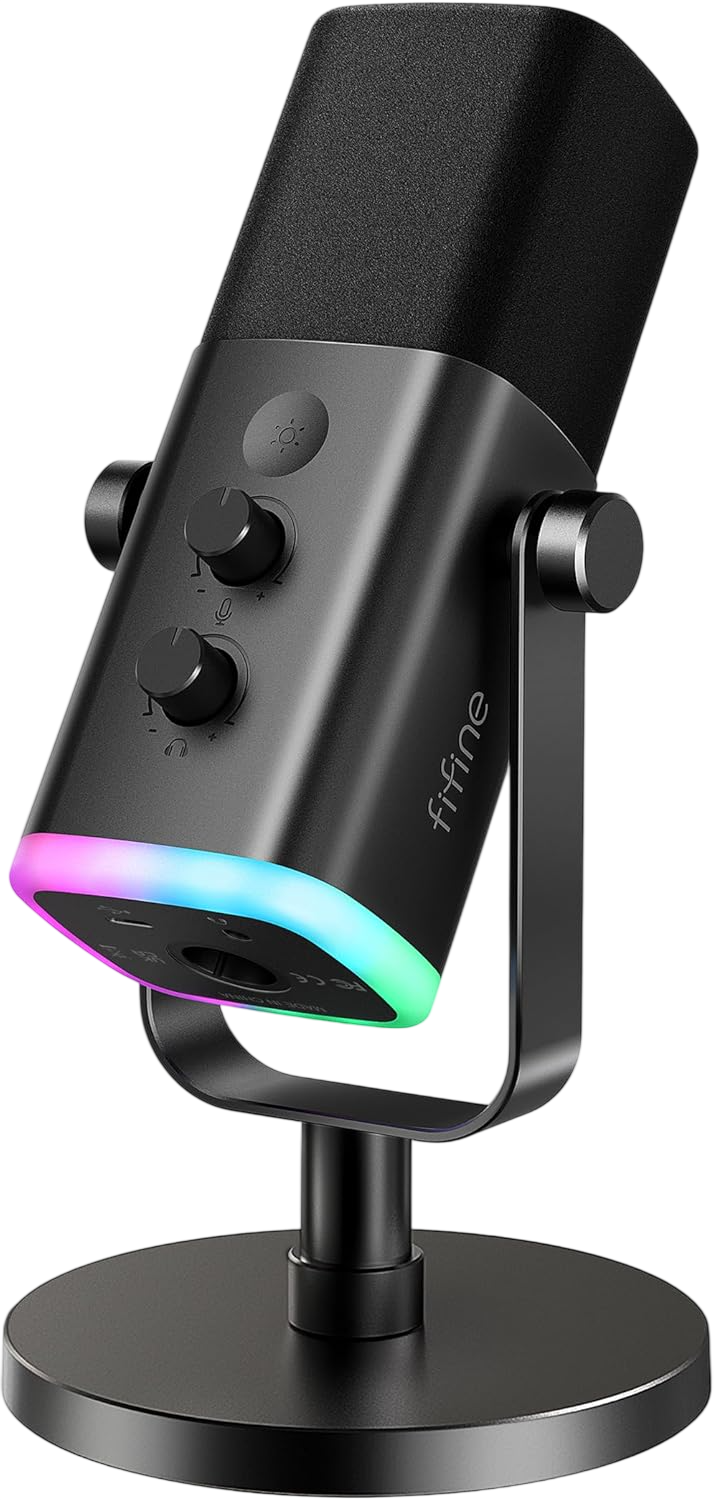
The FIFINE AM8 is a dynamic microphone with both USB and XLR connectivity, giving beginners a simple starting point and a possible upgrade path to an audio interface. Its main appeal is combining a gaming-friendly desktop setup with a lower-cost route into traditional microphone hardware.
Why we love it
USB and XLR connections provide useful long-term flexibility.
The dynamic design is generally suitable for voice chat in less-than-perfect rooms.
A USB connection avoids the need for an audio interface at first.
The dual-connection design supports future setup upgrades.
It offers a practical feature set for gaming and streaming at a value-oriented position.
Watch out for
XLR operation requires a compatible audio interface and additional cable.
It has fewer integrated processing features than premium USB options.
Performance depends heavily on speaking distance, gain, and positioning.
Best for: Budget-conscious gamers who want USB convenience now and an XLR upgrade path later.
The Shure MV6 deserves first place because it combines the qualities that matter most in everyday gaming: clear voice communication, straightforward setup, useful monitoring, and consistent output. Its dynamic microphone design and voice-isolation approach are well suited to desks with keyboards, mice, fans, and ordinary room noise. Auto Level Mode reduces the need to constantly adjust gain, while the Digital Popper Stopper and real-time denoiser address common problems such as plosives and background distractions. USB-C connectivity makes it accessible to most modern computers, and the headphone output supports immediate monitoring. The MV6 does not offer the multiple pickup patterns or extensive RGB features of some alternatives, but those features are not essential for most solo gamers. Its strongest advantage is the balance of focused voice capture, automatic processing, compatibility, and practical usability.
How we picked
These recommendations are based on an independent, research-based product analysis. We compared manufacturer specifications and official technical documentation with independent professional product evaluations, reviews from long-term owners, community discussions, and comparisons across various categories. The evaluation focused on voice clarity, background noise suppression, polar pattern, connection type, monitoring, controls, software support, platform compatibility, design, ease of setup, and overall value.
Priority was given to information that appeared consistently across multiple independent sources, rather than individual opinions or unverified claims. We also considered how each microphone fits into a specific gaming setup: a simple desktop system with USB connectivity, a streaming-focused workstation, a console-compatible system, or a path to future upgrades. Where sources differed, the most current and technically reliable information was used, and unverified performance claims were excluded. Product ratings reflect the balance of available features, practical ease of use, compatibility, reliability, and value in the current gaming microphone market. Price was not used as a fixed ranking factor, as it varies by region and time.
Frequently Asked Questions
USB is usually the better starting point because it connects directly to a computer and requires no audio interface. XLR can provide more control and a longer upgrade path, but it adds equipment, cabling, and gain-setting responsibilities. A hybrid microphone such as the FIFINE AM8 can provide both options.
A dynamic microphone can be a strong choice when the room contains keyboard noise, fans, or nearby conversations because it generally focuses more on sound close to the capsule. It still needs correct positioning and gain. A condenser microphone may sound more open and detailed, but it can require more attention to room noise.
No. Standard voice chat and streaming generally do not require the highest available recording resolution. Higher sample rates and bit depths can be useful for recording flexibility or processing headroom, but microphone placement, speaking distance, room noise, and gain usually have a greater practical effect on voice clarity.
Prioritize a cardioid or supercardioid pattern, a physical mute control, headphone monitoring, and a stable USB connection. Noise reduction can help in busy rooms, but it should not replace good placement. Position the microphone close to your mouth and keep the gain low enough to avoid capturing unnecessary background sound.
Compatibility varies by model and console. The HyperX QuadCast 2 is documented for PC, Mac, PlayStation 5, Nintendo Switch, and Steam Deck, while USB microphones generally require the console to recognize the device directly. Check the specific console and operating-system support before buying.
A dedicated microphone can provide better positioning flexibility, stronger voice presence, and more control over monitoring and mute functions. However, a headset remains more convenient and can be preferable if you move frequently or play in a shared room. Upgrade when voice clarity is a noticeable limitation rather than simply because a standalone microphone is popular.