Best OLED Monitors 2026: Top Picks for Gaming & Work
OLED monitors deliver unparalleled image quality with perfect blacks, infinite contrast, and lightning-fast response times ideal for gaming and creative work. This guide examines the best OLED monitors available in 2026, across a variety of sizes, resolutions, and price points. We evaluate the top models from leading manufacturers, including ASUS, LG, Samsung, Dell, and MSI, based on panel technology, refresh rate, HDR performance, connectivity, and long-term reliability. Whether you need a flagship 4K monitor for immersive gaming, a high-refresh 1440p display for esports, or an ultrawide monitor for work, our recommendations will help you find the right OLED monitor. Key considerations include pixel burn-in protection features, warranty coverage, and compatibility with your graphics card and gaming system.
Some links on this page are affiliate links. If you buy through them, we may earn a commission at no extra cost to you.
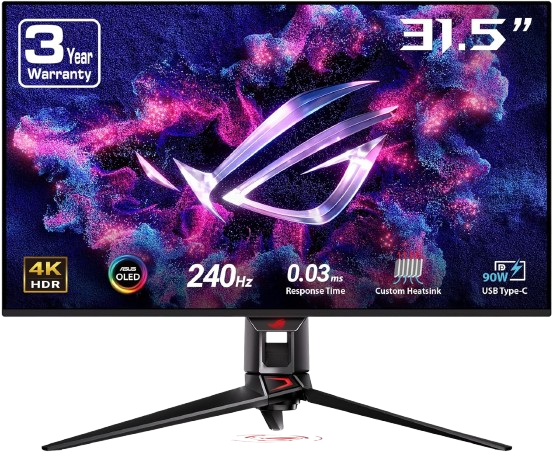
Flagship 32-inch 4K QD-OLED gaming monitor featuring 240Hz refresh rate, DisplayPort 2.1 connectivity, and advanced OLED Care burn-in protection. Delivers exceptional color accuracy with 99% DCI-P3 coverage and VESA DisplayHDR True Black 400 certification for stunning HDR performance.
Why we love it
Stunning 4K QD-OLED panel with exceptional color accuracy and perfect blacks
240Hz refresh rate with 0.03ms response time for ultra-smooth gaming motion
DisplayPort 2.1 support provides future-proof connectivity for next-gen GPUs
Custom heatsink and OLED Care Pro features actively manage burn-in risk
Dolby Vision HDR and VESA DisplayHDR True Black 400 certification
Watch out for
Premium price point significantly higher than 1440p OLED alternatives
Glossy screen coating may produce reflections in brightly lit rooms
Requires high-end GPU to fully utilize 4K 240Hz gaming capability
Best for: Enthusiast gamers and content creators seeking the best 4K OLED experience with future-proof connectivity and comprehensive burn-in protection.
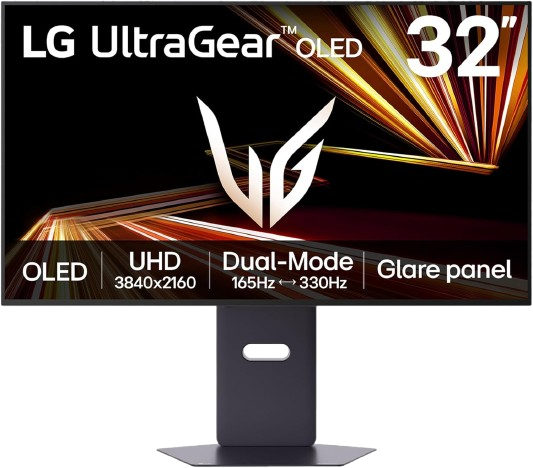
Versatile 32-inch 4K WOLED gaming monitor with innovative Dual-Mode technology that switches between 4K 165Hz for immersive gaming and 1080p 330Hz for competitive esports. Features Micro Lens Array+ technology for enhanced brightness and efficiency.
Why we love it
Dual-Mode feature instantly switches between 4K 165Hz and 1080p 330Hz
Micro Lens Array+ technology improves brightness and power efficiency
VESA DisplayHDR True Black 400 with excellent contrast and HDR performance
Glossy WOLED panel delivers vibrant colors and perfect black levels
Full ergonomic stand with height, tilt, swivel, and pivot adjustments
Watch out for
Dual-Mode requires resolution change rather than seamless refresh rate adjustment
No USB-C connectivity with power delivery on this specific model
WOLED panel may show slightly less saturated colors than QD-OLED competitors
Best for: Competitive gamers who want flexibility between immersive 4K gaming and high-refresh esports performance in a single display.
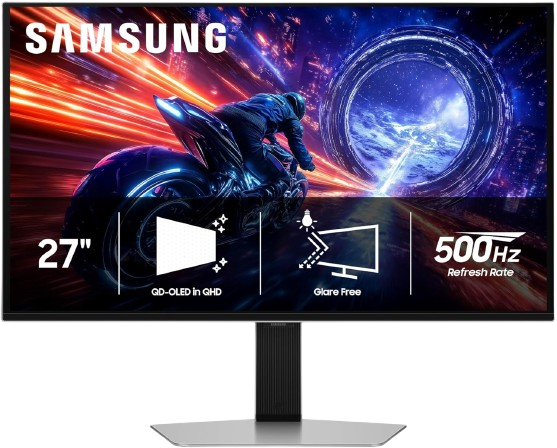
World's first 500Hz OLED gaming monitor featuring a 27-inch QD-OLED panel with Glare Free technology and Pantone Validated color accuracy. Delivers industry-leading refresh rate for competitive esports with VESA DisplayHDR True Black 500 certification.
Why we love it
Industry-leading 500Hz refresh rate provides unmatched motion clarity for esports
QD-OLED panel with 99% DCI-P3 color gamut for vibrant, accurate colors
Glare Free technology reduces reflections without traditional matte coating
Pantone Validated certification ensures accurate reproduction of 2100+ colors
VESA DisplayHDR True Black 500 certification for exceptional HDR performance
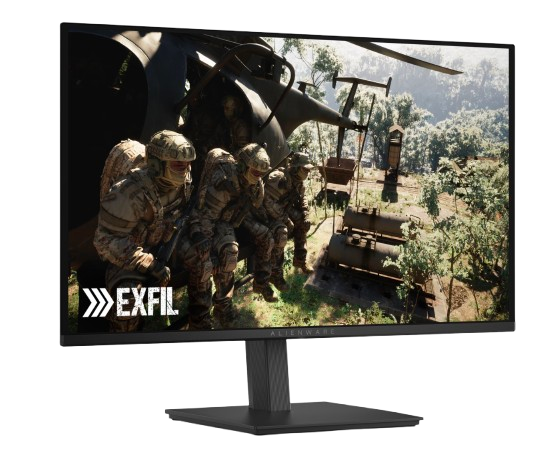
Affordable 27-inch QD-OLED gaming monitor delivering premium image quality at an accessible price point. Features 240Hz refresh rate, 0.03ms response time, and 99% DCI-P3 color coverage with comprehensive 3-year warranty including burn-in protection.
Why we love it
Exceptional value brings QD-OLED technology under the $400 price point
240Hz refresh rate with 0.03ms response time for smooth gaming
99% DCI-P3 color gamut delivers vibrant, accurate color reproduction
Compact 27-inch size fits comfortably on most desk setups
3-year warranty with burn-in coverage provides long-term peace of mind
Watch out for
HDMI ports limited to 120Hz, DisplayPort required for full 240Hz operation
Lower SDR brightness compared to premium OLED models
No USB-C connectivity or KVM switch for multi-device workflows
Best for: Budget-conscious gamers who want QD-OLED image quality and performance without paying premium pricing.
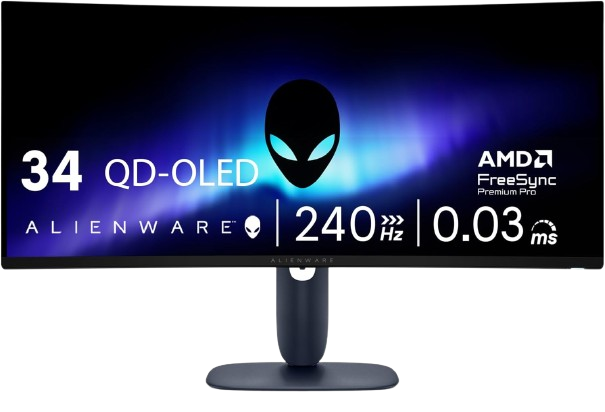
Premium 34-inch ultrawide QD-OLED curved gaming monitor with 21:9 aspect ratio, 240Hz refresh rate, and 1800R curvature. Features USB-C hub with KVM switch for seamless multi-device workflows and excellent color accuracy for creative professionals.
Why we love it
Immersive 34-inch ultrawide 21:9 aspect ratio enhances productivity and gaming
240Hz refresh rate with 0.03ms response time for smooth motion
1800R curvature reduces eye strain and enhances immersion
Excellent color accuracy with 99.3% DCI-P3 coverage for creative work
USB-C hub with KVM switch simplifies multi-device workflows
Watch out for
Ultrawide format not ideal for all productivity software and applications
Curved design may not suit all user preferences or viewing positions
Higher price than standard 16:9 OLED monitors of similar resolution
Best for: Professionals and gamers who want an ultrawide OLED for multitasking, creative work, and immersive gaming experiences.
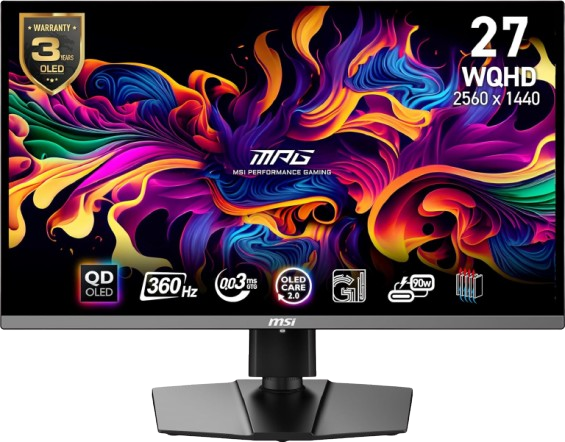
Feature-rich 27-inch QD-OLED gaming monitor with 360Hz refresh rate, USB-C connectivity with 90W power delivery, and KVM switch. Includes OLED Safeguard Plus technology with 3-year burn-in warranty for comprehensive protection.
Why we love it
360Hz refresh rate provides high-speed performance for competitive gaming
QD-OLED panel delivers excellent color accuracy and perfect blacks
USB-C connectivity with 90W power delivery charges laptops while displaying
KVM switch enables seamless control of multiple devices with one monitor
OLED Safeguard Plus with 3-year burn-in warranty protects your investment
Watch out for
1440p resolution may not satisfy users seeking 4K sharpness
SDR brightness lower than some premium OLED competitors
Glossy coating may reflect ambient light in bright environments
Best for: Gamers seeking high refresh rate QD-OLED performance with USB-C convenience at a competitive mid-range price point.
The ASUS ROG Swift OLED PG32UCDM monitor earned the "Best Overall" title thanks to its impressive combination of resolution, performance, connectivity, and long-term reliability available in a 4K OLED monitor. Its 32-inch 4K QD-OLED panel delivers exceptional image quality with perfect blacks, infinite contrast, and 99% coverage of the DCI-P3 color gamut, satisfying both gaming and creative workflows. A 240Hz refresh rate with a 0.03ms response time ensures smooth motion in competitive games while maintaining the visual fidelity expected from a premium 4K display. DisplayPort 2.1 connectivity ensures future-proofing your investment for next-generation graphics cards, while comprehensive OLED Care Pro features, including a dedicated heatsink and proximity sensor, actively reduce the risk of pixel burn-in. Dolby Vision HDR support and VESA DisplayHDR True Black 400 certification guarantee superior HDR performance with compatible content. Despite its high price, reflecting its flagship positioning, the combination of advanced panel technologies, advanced connectivity options, and reliable burn-in protection makes this 4K OLED monitor the most complete package for enthusiasts seeking the best available without compromise.
How we picked
Our recommendations are based on comprehensive independent research and cross-product analysis. We evaluated manufacturer specifications, technical documentation, and professional product reviews from multiple authoritative sources to verify claimed specifications and feature sets. Long-term user reviews and community discussions provided real-world data on reliability, burn-in resistance, and usability across various scenarios. We compared panel technologies, including QD-OLED and WOLED options, refresh rates from 240Hz to 500Hz, HDR certification, and connectivity options such as DisplayPort 2.1, HDMI 2.1, and USB-C with power delivery. Priority was given to information that appeared consistently in independent reviews over isolated claims. Where sources presented conflicting data, we favored recent, detailed technical evaluations and manufacturer-verified specifications. This methodology ensures that recommendations reflect actual product capabilities and user satisfaction, not marketing claims or the opinions of a single source.
Frequently Asked Questions
Focus on panel technology (QD-OLED vs WOLED), resolution and screen size combination, refresh rate matching your GPU capability, and HDR certification level. QD-OLED panels typically offer more saturated colors while WOLED may provide better text clarity. Verify connectivity includes the ports you need such as DisplayPort 2.1 for future GPUs or USB-C with power delivery for laptop users. Check warranty terms specifically for burn-in coverage duration and what triggers qualify for replacement. Consider your primary use case since 4K models excel for immersive gaming and content creation while high-refresh 1440p options serve competitive gamers better.
Modern OLED monitors incorporate multiple burn-in mitigation technologies including pixel shifting, logo dimming, automatic brightness limiting, and custom heatsinks that significantly reduce risk compared to earlier generations. Most manufacturers now offer 3-year warranties that explicitly cover burn-in defects, providing confidence for typical mixed-use scenarios. However, static content displayed for extended daily periods such as stock tickers, taskbars, or news channels still poses elevated risk. Users planning 8+ hours daily of static-heavy workflows should consider their usage patterns carefully and utilize built-in screen savers and pixel refresh features. For typical gaming and entertainment use with varied content, burn-in concerns are substantially reduced with current generation panels.
240Hz represents the sweet spot for most gamers, providing noticeably smoother motion than 144Hz while remaining achievable with current high-end graphics cards at 1440p or 4K resolutions. Competitive esports players benefiting from every frame advantage may prefer 360Hz or 500Hz models, though these require powerful GPUs to actually reach those frame rates in games. For primarily single-player or visually-focused gaming, 240Hz delivers excellent smoothness without the premium pricing of ultra-high refresh panels. Console gamers should note that PS5 and Xbox Series X support up to 120Hz over HDMI 2.1, making 240Hz monitors future-proof but not fully utilized by current consoles. Match refresh rate to your GPU capability and game types rather than chasing maximum numbers.
QD-OLED panels from Samsung Display typically deliver more vibrant, saturated colors with higher peak brightness in HDR content, making them ideal for gaming and media consumption. WOLED panels from LG Display often provide better text clarity with less color fringing on fine details, benefiting productivity and office work. Both technologies offer perfect blacks, infinite contrast, and sub-0.1ms response times that eliminate motion blur. QD-OLED uses a triangular pixel arrangement that can show slight color shifts on very fine text, while WOLED's RGB stripe layout handles text more cleanly. For pure gaming and entertainment, QD-OLED's color performance edges ahead. For mixed gaming and productivity with significant text work, WOLED may provide better daily comfort.
OLED monitors can work well for office tasks but require consideration of usage patterns and specific model selection. Higher resolution 4K models provide better text clarity than 1440p at the same screen size due to increased pixel density. WOLED panels generally handle fine text better than QD-OLED thanks to their RGB stripe subpixel arrangement. Users should enable taskbar auto-hide, use dark themes where possible, and vary window positions to minimize static element exposure. Built-in pixel refresh and screen saver features should be utilized during extended work sessions. For primarily office work with occasional gaming, consider whether a high-quality IPS or Mini-LED monitor might better serve static content needs while an OLED handles gaming. Mixed users should prioritize models with comprehensive burn-in protection and warranty coverage.
Achieving 240fps at 4K resolution requires current-generation high-end graphics cards such as RTX 5080 or RTX 5090 class GPUs in optimized titles. More realistically, expect 100-160fps in demanding AAA games with RTX 5070 Ti or RTX 5080 cards using appropriate graphics settings. Less demanding or well-optimized esports titles can reach 240fps more easily even with slightly lower-tier hardware. The DisplayPort 2.1 connectivity on newer 4K OLED monitors ensures bandwidth for 4K 240Hz when your GPU supports it. For 1440p 240Hz or 360Hz gaming, RTX 5070 or RTX 5070 Ti class cards provide more achievable frame rates. Match your GPU investment to your target resolution and refresh rate rather than buying a monitor your system cannot fully utilize.